BREAKING: Black Sabbath Guitarist Tony Iommi Pa…read more.
Black Sabbath guitarist Tony Iommi has shared a candid reflection on his long relationship with guitars, revealing that while he always admired the Gibson Les Paul, he never managed to make it his main instrument. The heavy metal pioneer, known for shaping the sound of an entire genre, explained that despite his admiration for the guitar’s tone and look, the Les Paul simply didn’t suit his playing style.
“I always wanted a Les Paul, but I couldn’t play them,” Iommi said in a recent interview. “They just didn’t feel right for me. I loved the way they looked and how they sounded when other people played them, but it wasn’t comfortable in my hands.”
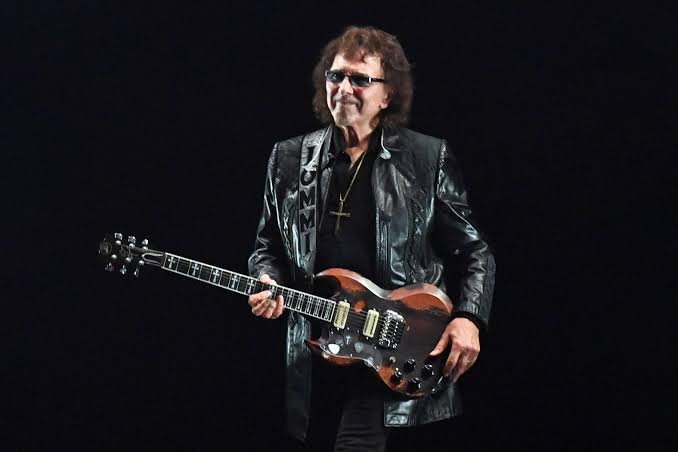
Iommi’s comment highlights a personal and practical side of musicianship that often goes unnoticed the importance of how an instrument feels rather than just how it sounds. His eventual decision to stick with the Gibson SG would go on to define his signature tone, a sound that helped shape the foundation of heavy metal.
The guitarist’s journey with instruments took a dramatic turn after his workplace accident in his youth, which cost him the tips of two fingers on his fretting hand. Determined to keep playing, Iommi adapted his technique and made adjustments to his guitars, such as using lighter strings and custom finger caps. The Gibson SG, with its lighter weight and thinner neck, proved to be the perfect fit for his needs.
“The SG just worked better for me,” Iommi explained. “It was easier to handle, and I could reach the higher frets without much strain. After the accident, it became the guitar that allowed me to keep playing comfortably.”
While many of his contemporaries including Jimmy Page, Slash, and Peter Green became synonymous with the Les Paul, Iommi’s SG became just as iconic in its own right. Over time, the instrument became inseparable from his image on stage and in the studio, leading Gibson to create several signature models based on his original guitars.
Even though he never became a Les Paul player, Iommi continues to respect and admire the instrument’s role in music history. “They’re fantastic guitars,” he said. “I’ve heard amazing things done with them, but for me, the SG just felt more natural.”
Tony Iommi’s reflections serve as a reminder that personal connection to an instrument goes beyond reputation or tradition. It’s about how a guitar allows a musician to express themselves fully and comfortably. For Iommi, the SG provided the perfect balance of sound and playability that helped him forge a new musical path after his injury.
Decades later, the sound of Iommi’s SG continues to echo through generations of metal and rock musicians. His story shows that sometimes, finding your voice as an artist isn’t about following trends it’s about discovering what truly fits you.