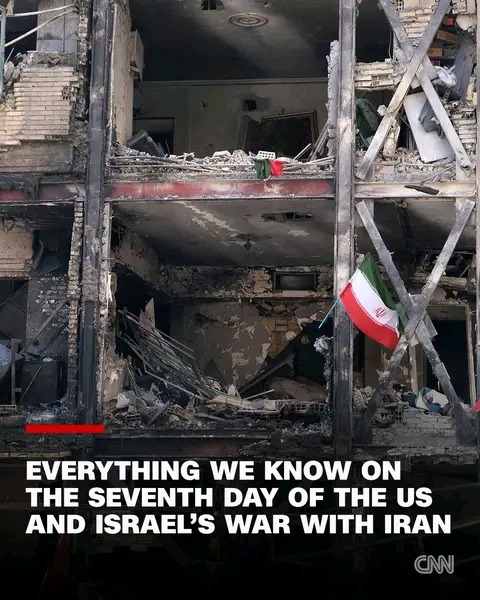
Heavy bombardment continued throughout the night in Tehran, Isfahan, and Karaj.
The conflict between the United States, Israel, and Iran has reached a grim milestone today, Friday, March 6, 2026, marking the seventh day of a high-intensity military campaign that has fundamentally reshaped the Middle East. What began on February 28 as a series of lightning strikes codenamed “Operation Epic Fury” by the U.S. and “Operation Roaring Lion” by Israel has evolved into a sustained war aimed at dismantling Iran’s nuclear infrastructure and inducing regime change.
The Current Situation on the Ground
Heavy bombardment continued throughout the night in Tehran, Isfahan, and Karaj. Israeli Defense Forces (IDF) officials announced this morning that they have entered a “new phase” of the war, focusing on the remnants of the Islamic Revolutionary Guard Corps (IRGC) command structure.
The humanitarian toll is mounting rapidly. According to the Iranian Red Crescent and international monitors:
Casualties: At least 1,332 people have been confirmed killed in Iran since the strikes began.
Infrastructure: Significant damage has been reported to civilian areas, including schools in Qazvin and Tehran, sparking international calls for an independent probe into “assaults on children.”
Displacement: The UN reports that over 230,000 people have been displaced, with many fleeing toward the Syrian border.
Leadership Vacuum and Political Stance
The status of the Iranian leadership remains the central mystery of the conflict. Following the initial strikes on February 28, Israeli Prime Minister Benjamin Netanyahu stated there are “many signs” that Supreme Leader Ayatollah Ali Khamenei is no longer alive after his secure compound was leveled.
In Washington, President Donald Trump has maintained a hardline stance. In a social media post early Friday, the President appeared to rule out any immediate diplomatic off-ramps, demanding Iran’s “unconditional surrender.” White House officials confirmed that the U.S. goal remains the permanent neutralization of Iran’s ballistic missile and nuclear programs.
Regional and Global Aftershocks
The war has not remained confined to Iranian borders. Iran’s “True Promise IV” retaliation has seen waves of drones and missiles targeting U.S. and Israeli interests across the Gulf.
Energy Markets: Benchmark oil prices have surged as the Strait of Hormuz remains a high-risk zone. Qatar’s energy minister warned today that Gulf states may be forced to shut down production if infrastructure remains under threat.
International Reaction: UN Secretary-General António Guterres warned today that the global economy is at “grave risk” and that the situation could “spiral beyond anyone’s control.” Meanwhile, Russia is reportedly providing intelligence to Tehran, further complicating the geopolitical landscape.
As the seventh day draws to a close, the “unrestricted euphoria” of military commanders contrasts sharply with a world on edge. With no ceasefire in sight, the conflict appears poised to enter a long, volatile chapter of regional instability.