Coldplay Frontman Chris Martin officially Refused…read more.
February 25, 2026
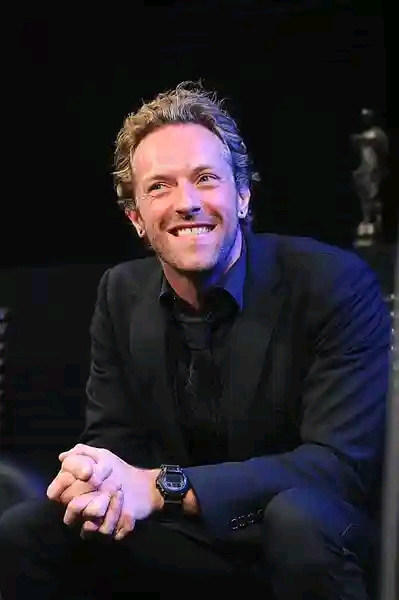
In a revealing new interview, Coldplay frontman Chris Martin has opened up about his early musical boundaries, admitting that as a teenager, he flatly refused to perform songs he perceived as being about “the Devil or evil.”
Speaking on the popular #ABTalks podcast with host Anas Bukhash, the 48-year-old singer reflected on how his strict religious upbringing in Devon, England, shaped his early artistic choices. Martin, who attended the conservative evangelical Belmont Chapel as a child, described a moment at age 15 when his teenage bandmates suggested covering certain rock classics only to be met with a firm “no.”
A “Strange Indoctrination”
“There were a couple of songs when I was 15 that I wouldn’t sing,” Martin recalled during the episode. “I was in a band and they wanted to do some covers and I said, ‘I don’t think I can sing that,’ because they were about evil or the Devil.”
While Martin didn’t name every track on his “banned” list during the podcast, he has previously mentioned The Rolling Stones’ iconic “Sympathy for the Devil” and “Paint It Black” as songs that once triggered his spiritual alarms.
“Now I realize it was just a song,” Martin laughed, reflecting on his younger self. “But at the time, it felt very real. There was a lot of strange indoctrination growing up… not even deliberately, but it was there.”
From “Evangelical” to “Alltheist”
The Yellow singer explained that while those early fears provided a “method of coping” and a sense of structure during his youth, his perspective has shifted dramatically over the decades. Today, Martin famously describes himself as an “alltheist.”
“My God, for me, is all things and all,” he explained, reiterating a philosophy he first shared in 2021. “God is everywhere and everyone… it’s the vast majesty behind everything.”
The Legacy of “Clean” Rock
Despite his evolved views, fans note that Martin’s early aversion to “dark” themes seems to have left a permanent mark on Coldplay’s DNA. Since their debut with Parachutes in 2000, the band has become global icons of optimistic, “clean” arena rock.
-
Spiritual Imagery: Tracks like “Viva La Vida” and “Fix You” are steeped in quasi-religious metaphors.
-
Positive Messaging: Recent hits like “Higher Power” and “We Pray” (from their latest records) focus on unity and light rather than traditional rock-and-roll rebellion.
While some critics once labeled the band “boring” for their lack of edge, Martin’s recent comments suggest that his commitment to “the light” isn’t a marketing strategy it’s a deeply rooted instinct that began long before he ever ruled the world.